ZAPEX-G honing stones and EHWA Mevious grinding tools
EHWA DIAMOND - since 1975
ZAPEX-G: honing stones for brake discs
EHWA presents ZAPEX-G honing stones and related tool designs for brake disc machining. The application concerns the friction ring surface; honing and grinding remain distinct tool and process tasks.
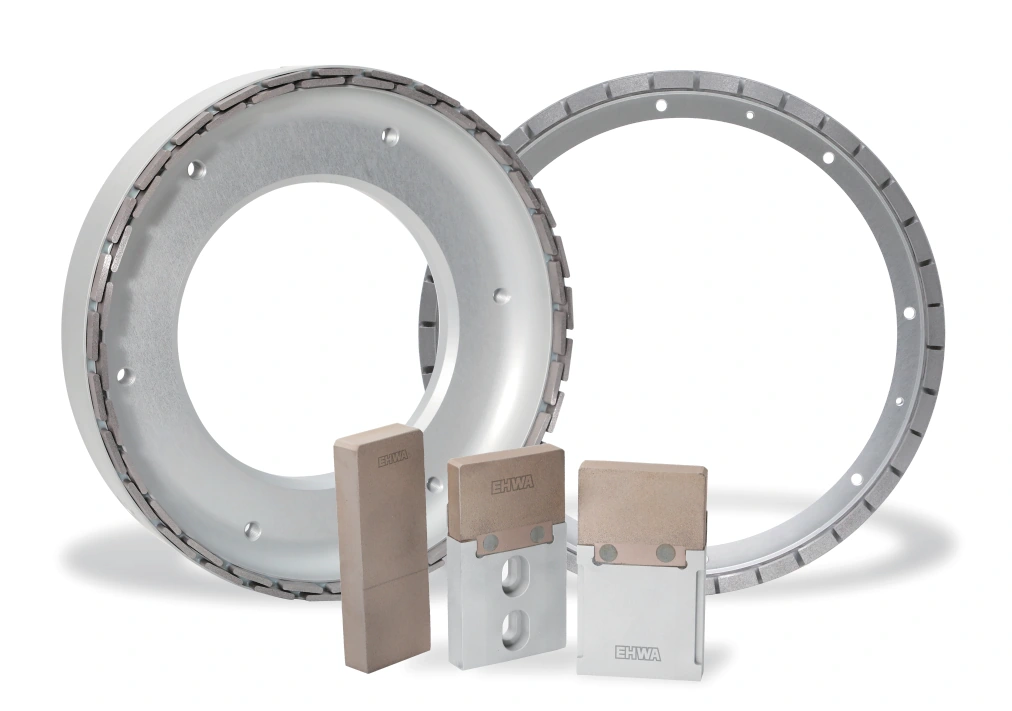
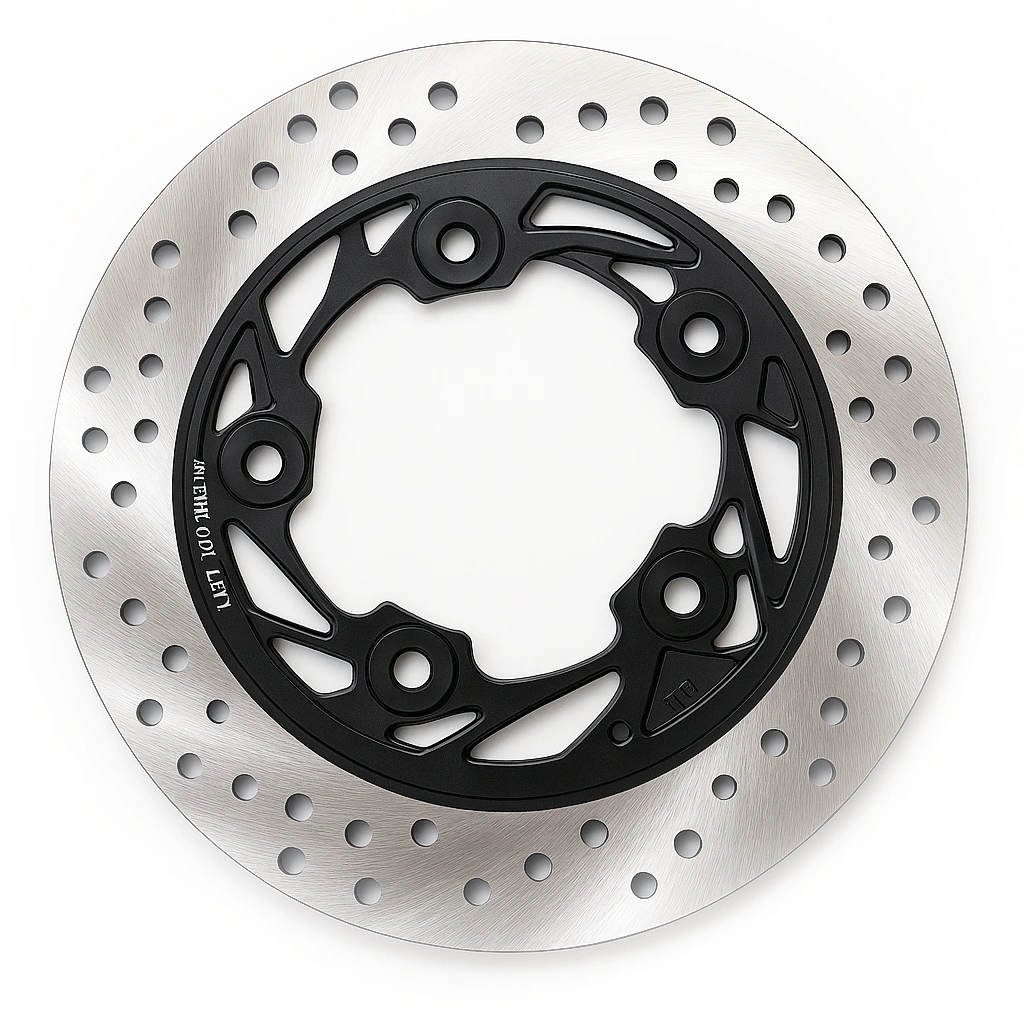
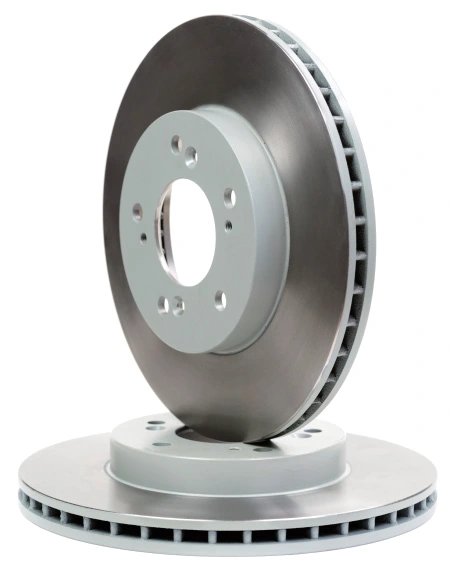
The image labels 2WD (SUS) and 4WD (FC) are retained. They do not replace a precise material or vehicle identification for your application. Tool selection considers friction ring material, geometry, mounting and required surface.
EHWA describes long tool life for ZAPEX-G with corresponding potential to reduce tooling costs. High processing speed is intended to support short machining cycles. Achievable useful tool life and cycle time are assessed alongside surface quality in the specific process; the sheet does not provide universal numerical values for these features.
Mevious: hybrid bond for coated brake discs
EHWA describes Mevious as a tool solution for brake disc applications in the Euro 7 context. Its central feature is a specially developed hybrid bond combining metal and vitrified bond constituents.
The document describes the following benefits:
- Wear resistance combined with grinding performance.
- Extended useful tool life.
- Profile stability during grinding.
These properties are matched to coating structure, surface requirements and machine. The description “for Euro 7” identifies the tool line's application focus; it does not independently establish vehicle type approval or specified brake particle emissions.
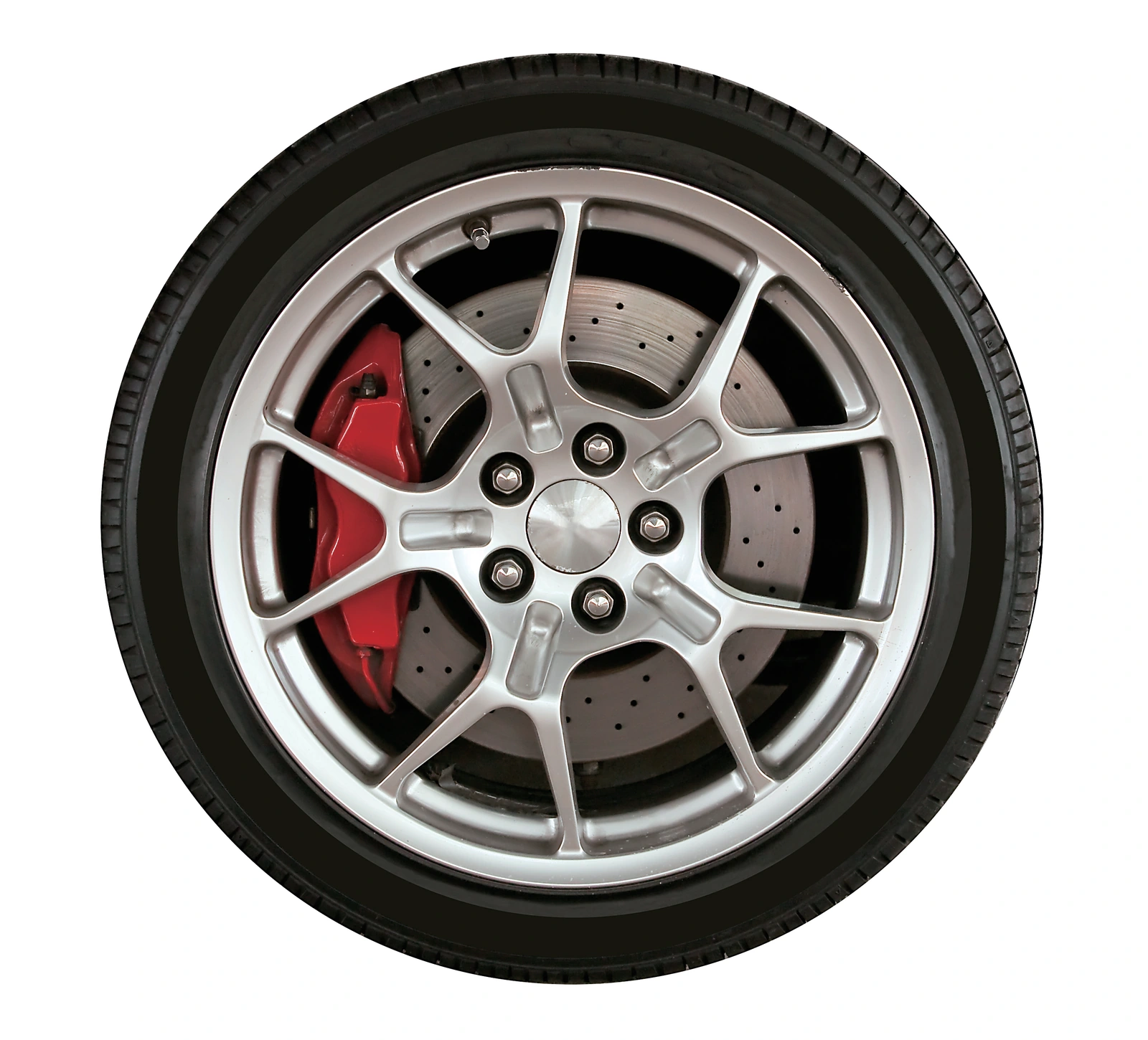
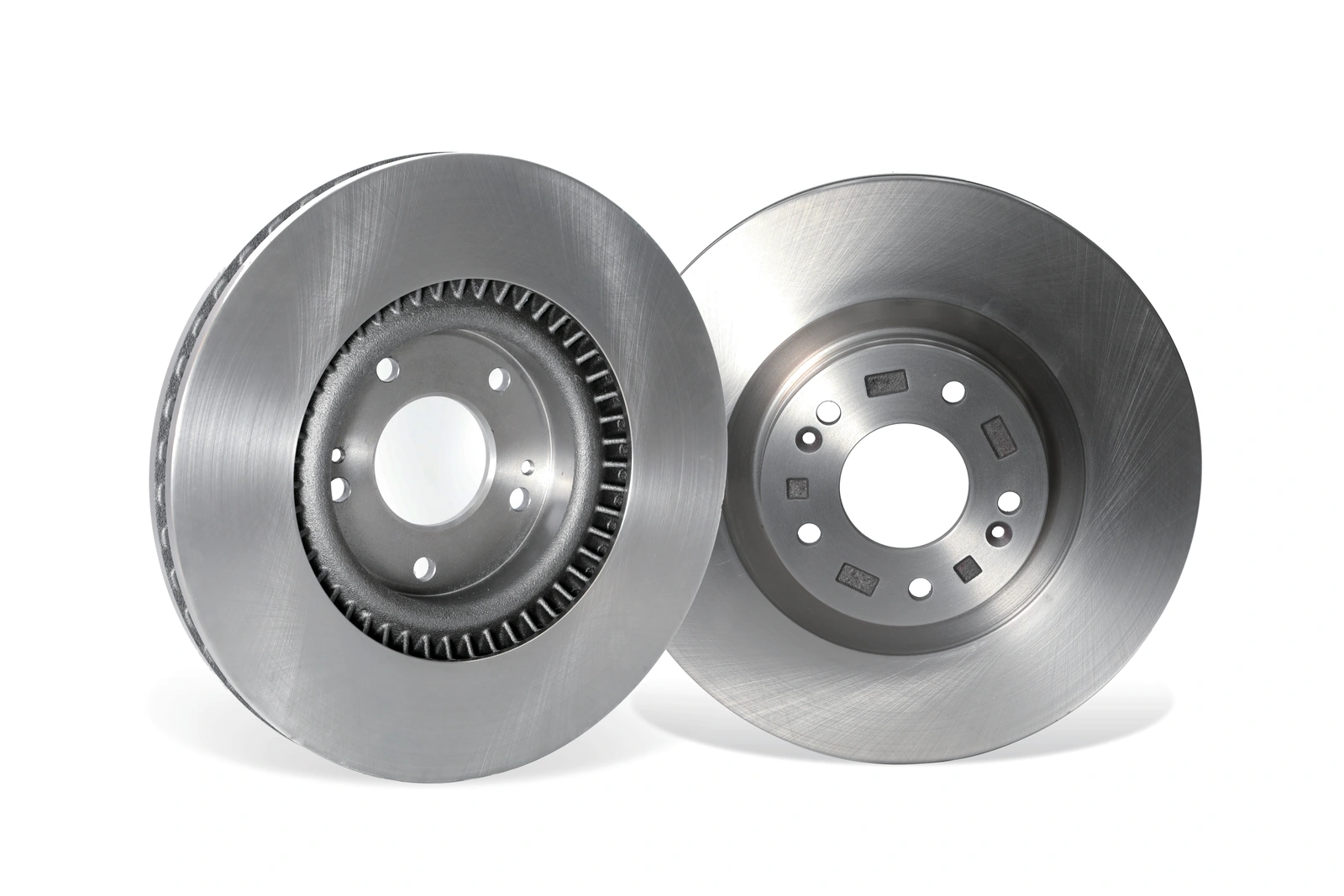
Surface and coating examples
The image sequence compares a condition after laser cladding with a condition after grinding. The workpiece and surface images remain associated with the two process conditions.
| Illustrated condition | Top layer | Buffer layer | Base |
|---|---|---|---|
| After laser cladding | TiC, 250 µm | SUS, 100 µm | Cast iron |
| After grinding with a grinding wheel | TiC, 200 µm | SUS, 100 µm | Cast iron |


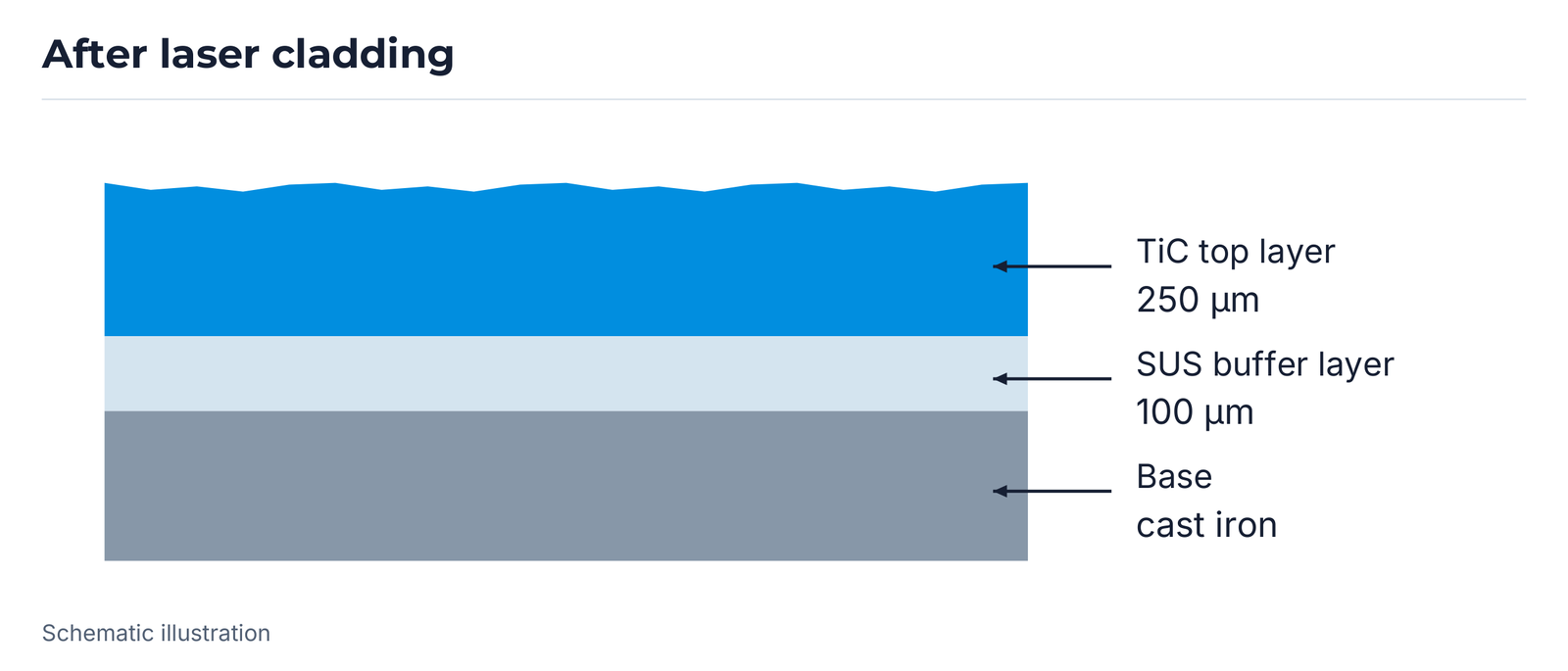
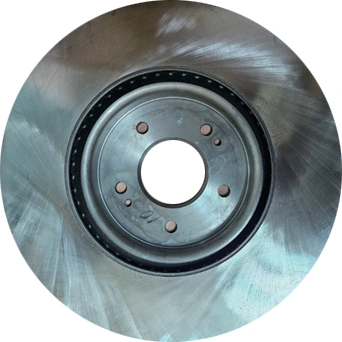

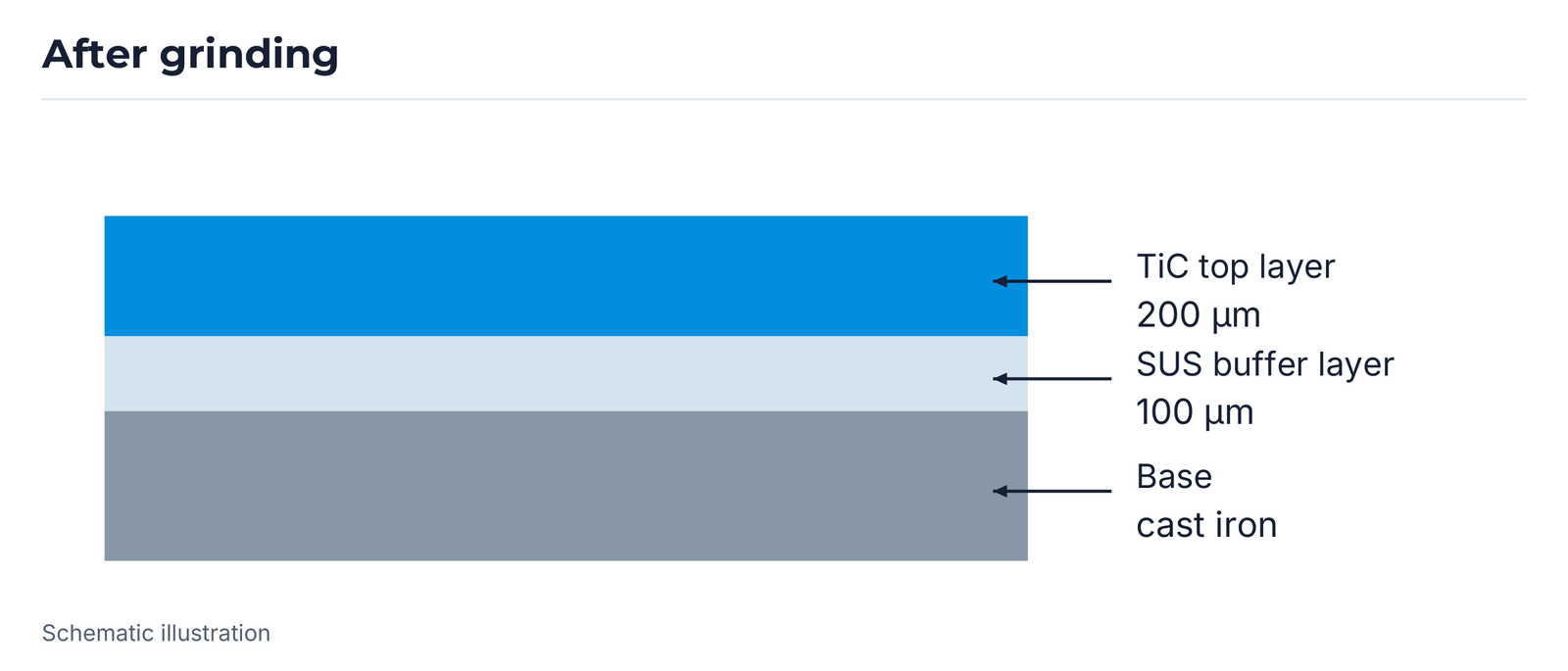
The thickness values belong to the two illustrated layer diagrams. The document does not identify a complete test setup or unambiguously link the images to a particular wheel specification. The comparison therefore does not establish a universally prescribed stock removal or guaranteed final coating thickness. TiC and SUS remain the layer designations in the illustration; no additional chemical composition is introduced.
Discuss your brake disc surface
Provide the base material, deposited layers, layer thicknesses and friction ring geometry. Add the machine, mounting, coolant arrangement, existing tool and required surface parameters. ZAPEX-G honing and Mevious grinding are considered separately within your process sequence.
Also describe your objective: surface quality, useful tool life, profile accuracy or machining time. This links a tool change to a specific process target.
EHWA Europe: info@ehwadia.de · +49 6173 997780
Editorial edition: 13 October 2026. Technical basis: the complete one-page EHWA brake disc sheet covering ZAPEX-G and Mevious.