EHWA DIAMOND - since 1975
Tools and application
EHWA combines resin, metal and vitrified bonds with the required grinding task. CBN wheels address HSS rolls; the programme shows diamond wheels for carbide rolls. Shape, grit, grade, concentration and bond are specified with the machine, roll material and surface objective.
CBN for demanding roll materials
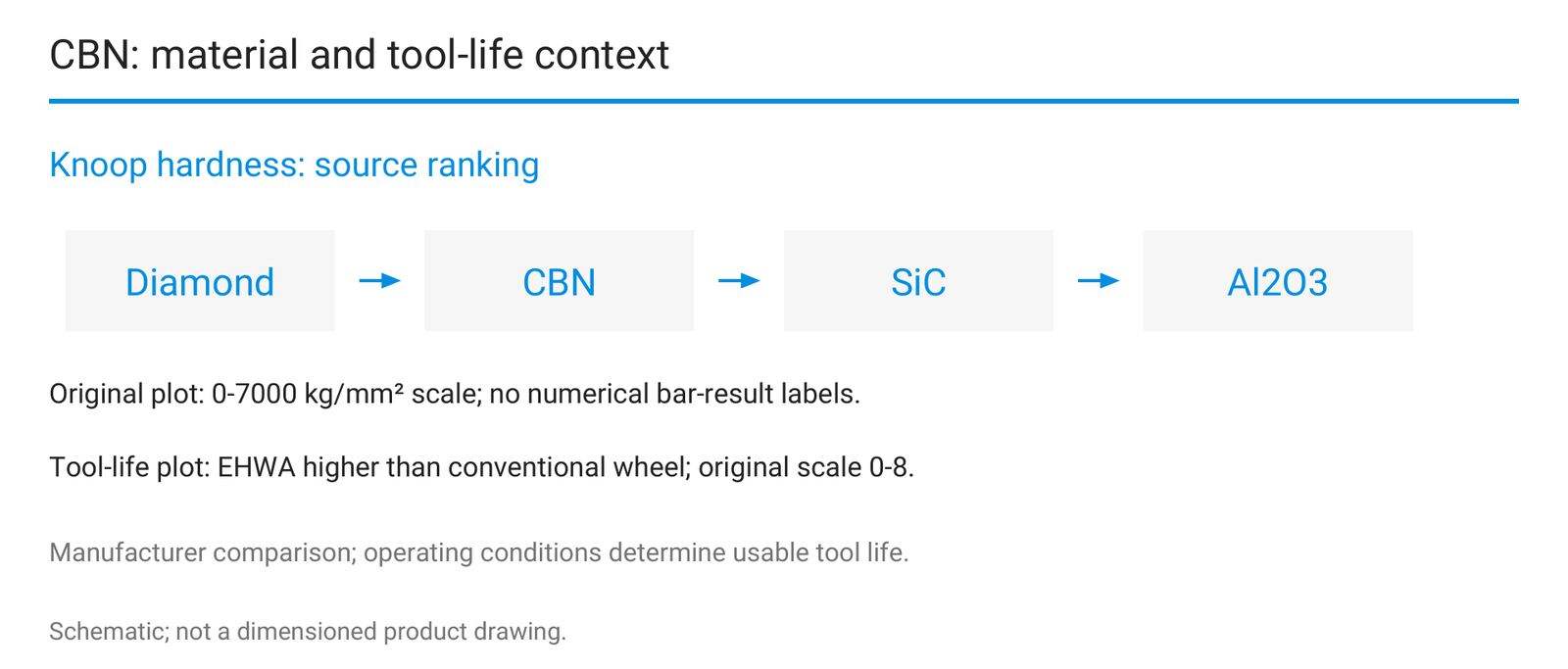
The EHWA document describes CBN wheels for hard and difficult-to-machine roll materials. Objectives include shorter grinding time, consistent surfaces, stable shape retention and longer usable wheel life. The manufacturer illustration states 5-10 times the life of conventional wheels; the actual relationship depends on material, process and wheel design. Test conditions are not stated for this general claim.
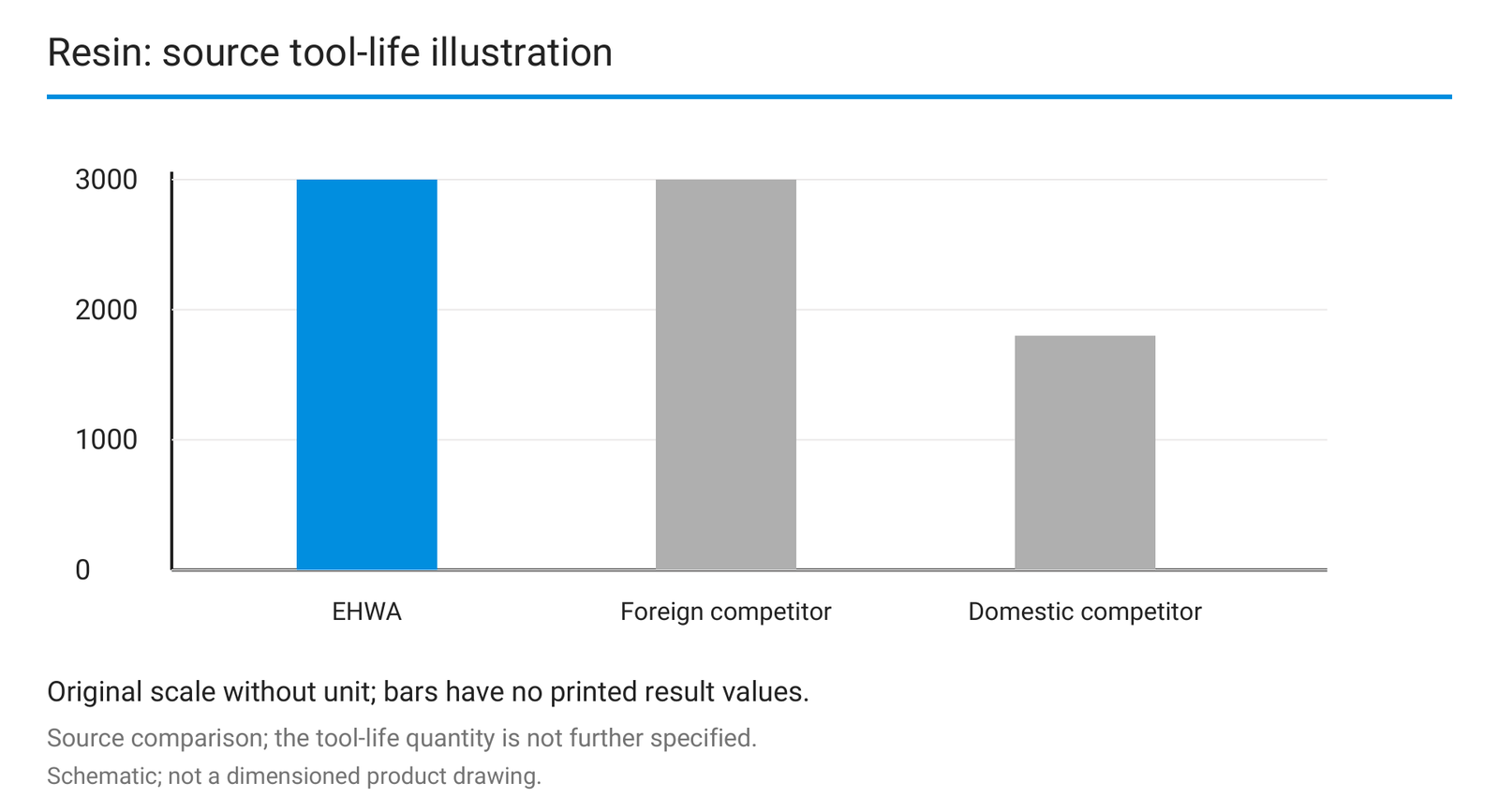
The hardness plot ranks diamond ahead of CBN, SiC and Al2O3. Its scale is 0-7000 kg/mm², without printed result values on the bars. The tool-life illustration places EHWA above a conventional wheel on a 0-8 scale with no stated unit. These illustrations supplement the separate, specifically described trials.
Technical source: Q246, page 3.
Grade order and concentration selection
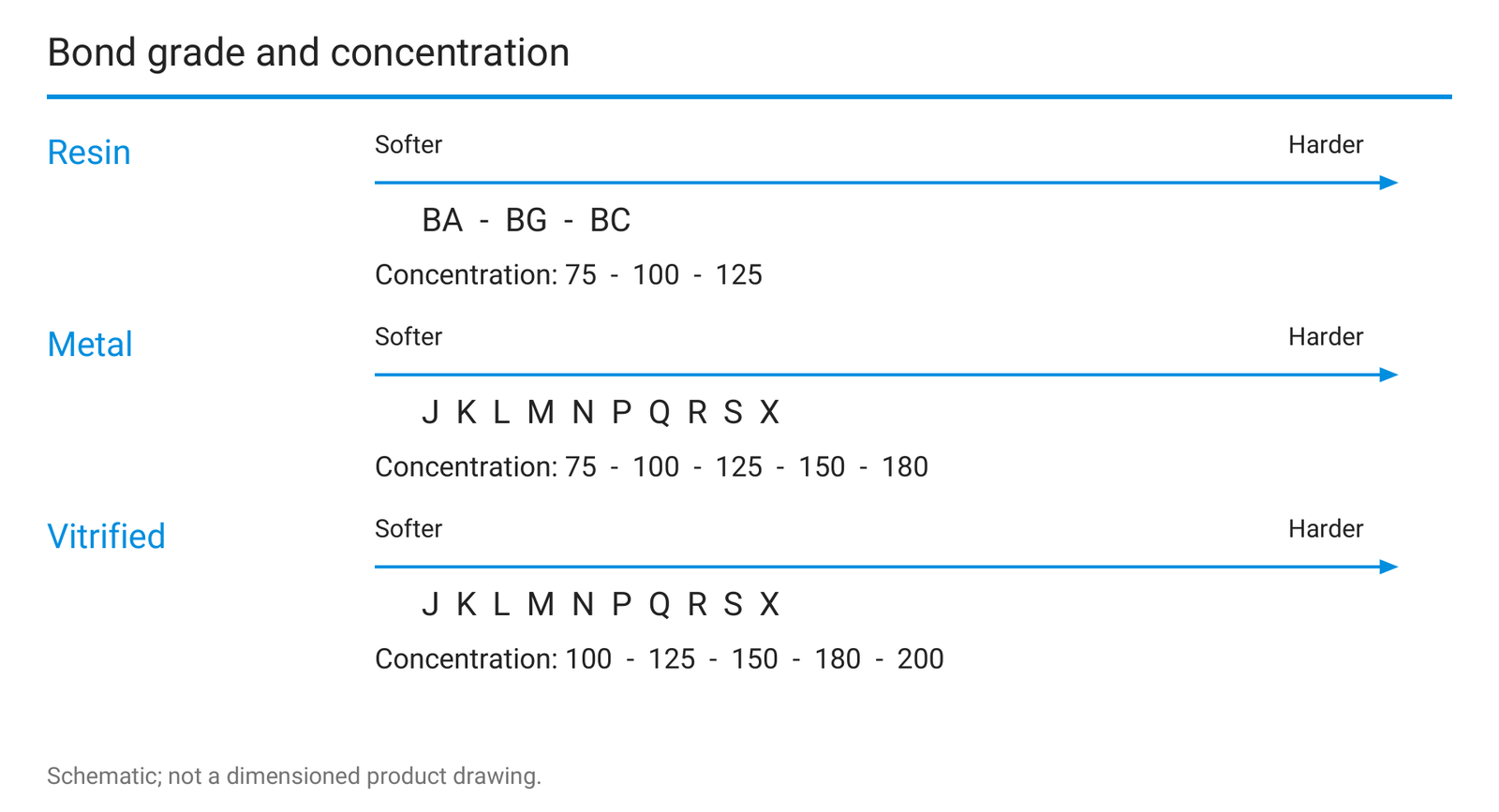
The sequences below retain the relative source order from softer to harder and the listed concentration classes. They are selection features rather than derived physical hardness values.
| Bond family | Source order: softer to harder | Concentration classes |
|---|---|---|
| Resin | BA - BG - BC | 75 / 100 / 125 |
| Metal | J / K / L / M / N / P / Q / R / S / X | 75 / 100 / 125 / 150 / 180 |
| Vitrified | J / K / L / M / N / P / Q / R / S / X | 100 / 125 / 150 / 180 / 200 |
Technical source: Q240 p6 and Q246 p2.
Grinding ability, tool life and structure
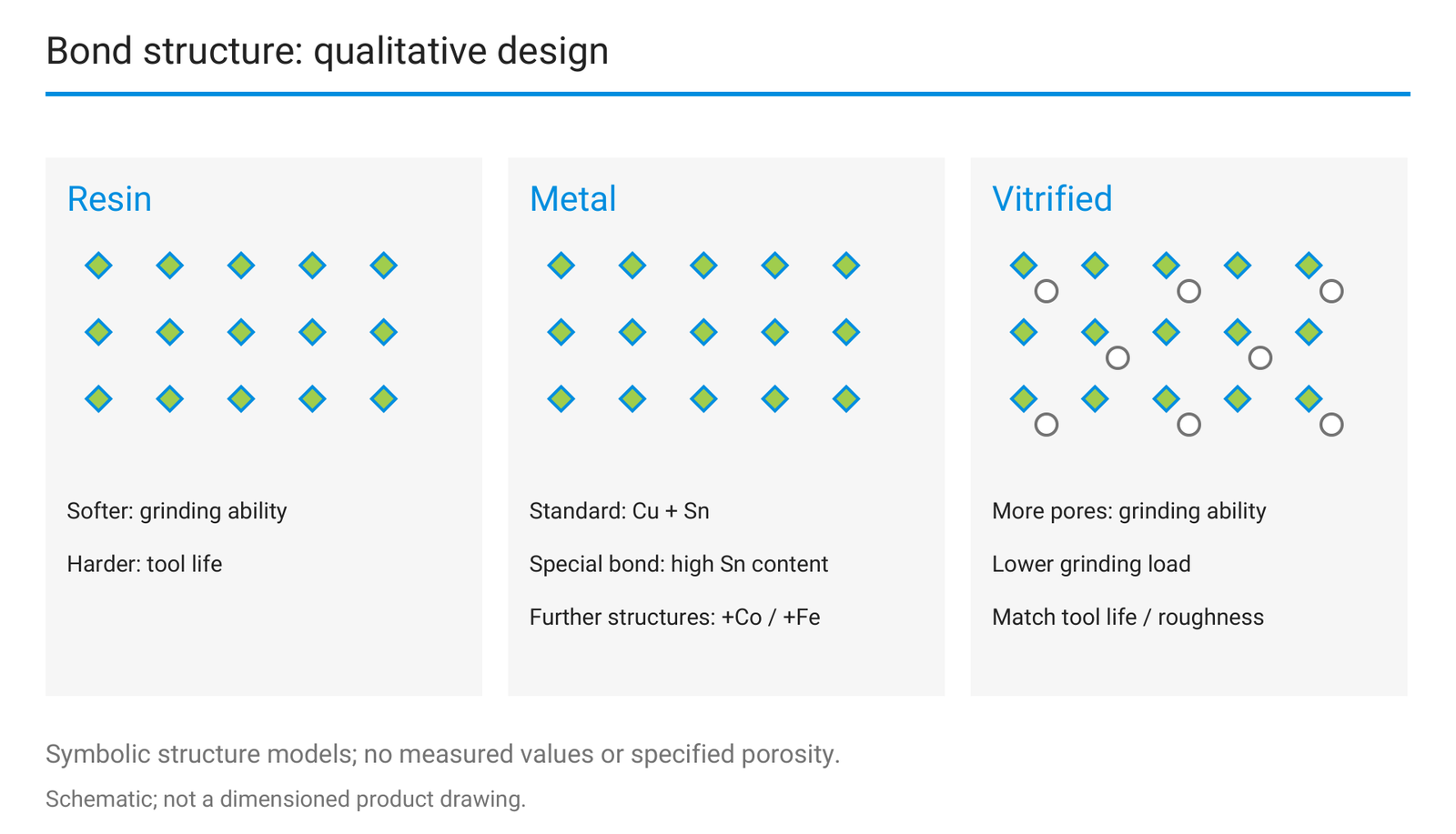
Resin bonds match resin and fillers to grinding ability and tool life. The source shows softer and harder structures as qualitative selection guidance. Metal bonds are based on materials including copper and tin; the source shows standard Cu+Sn structure, a special high-tin bond, and structure variants with Co and Fe.
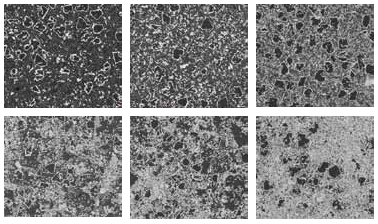
Vitrified bonds combine rigidity with adjustable pore structure. The manufacturer illustration associates higher porosity with grinding ability and lower grinding load. Tool life and surface roughness are matched with the actual bond structure. Microstructure images and mechanism diagrams introduce no additional porosity percentages or measured relative values.
Technical source: Q240, pages 3-5.
Roll grinding: specification and bond selection
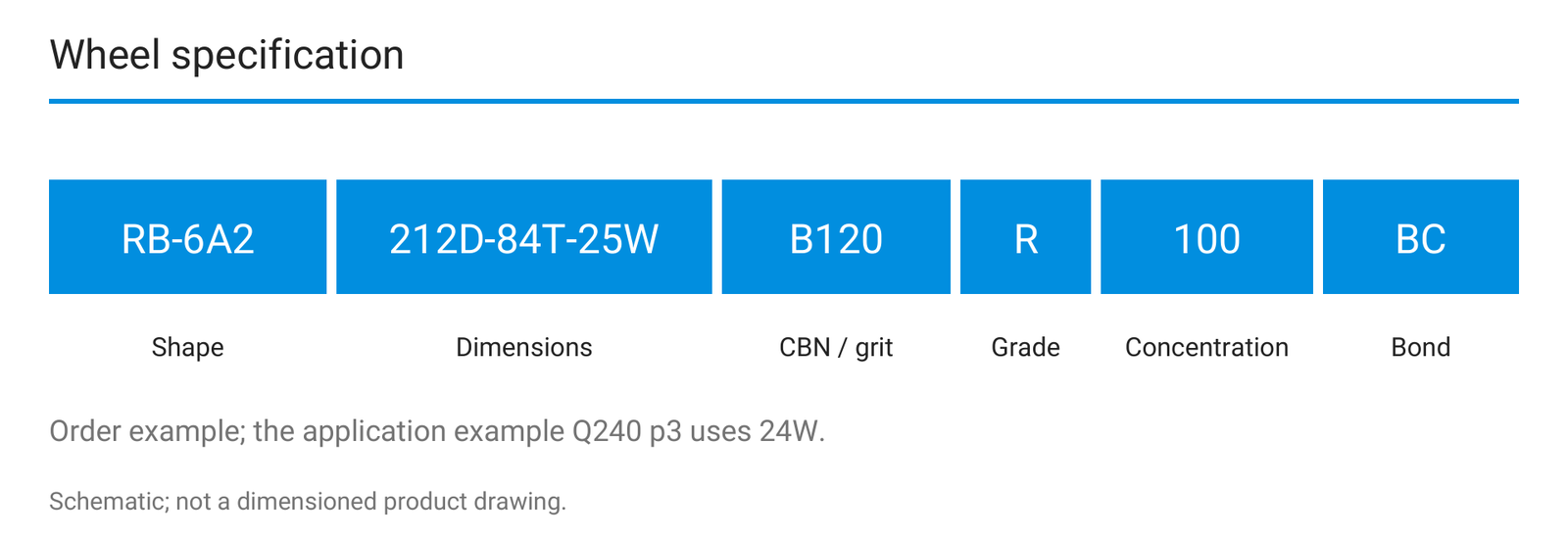
The example RB-6A2, 212D-84T-25W, B120R100BC separates shape, dimensions, CBN grit, grade, concentration and bond. The ratings below are relative catalogue ratings rather than measured results. Q240 rates MB2 tool life at four stars and Q246 at three; both source editions are retained separately.
| Bond | Characteristic | Grinding ability [stars] | Tool life [stars] |
|---|---|---|---|
| BA | Good surface | 4 | 2 |
| BG | General | 4 | 3 |
| BC | High tool life | 2 | 5 |
| MA | General | 4 | 3 |
| MB2 (Q240) | General | 5 | 4 |
| MB2 (Q246) | General | 5 | 3 |
| MG | High tool life | 3 | 5 |
| VB | General | 4 | 4 |
| VBT | High feedrate | 5 | 2 |
| VE | High tool life | 2 | 5 |
Technical source: Q240, page 6.
Resin bond: HSS roll application example
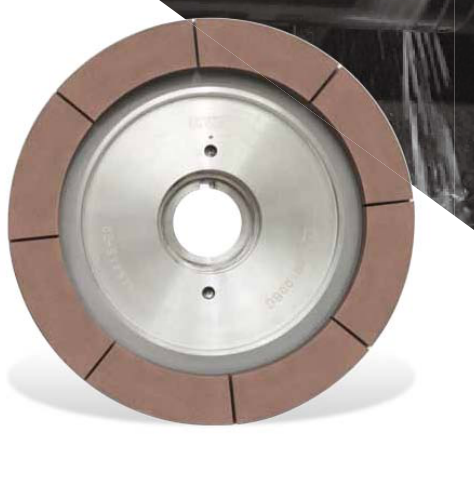
Resin bonds based on phenolic resin or polyimide are adapted through fillers. Cutting ability and straightforward truing and dressing support surface finish. This example states 24W; the separate designation example states 25W.
| Parameter | Source value |
|---|---|
| Wheel size | RB-6A2, 212D-84T-24W |
| Specification | B120R100B |
| Workpiece | Finishing Mill |
| Material | HSS (High Speed Steel) |
| Machine | On-Line RSM |
| MPM | 1000 |
| Pressure | 45-53 kgf/cm² |
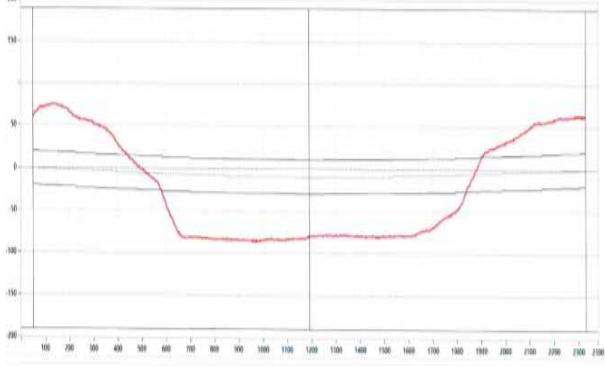
| Roll grinding deviation | <5 µm |
Technical source: Q240, page 3.
Metal bond: diamond for carbide rolls
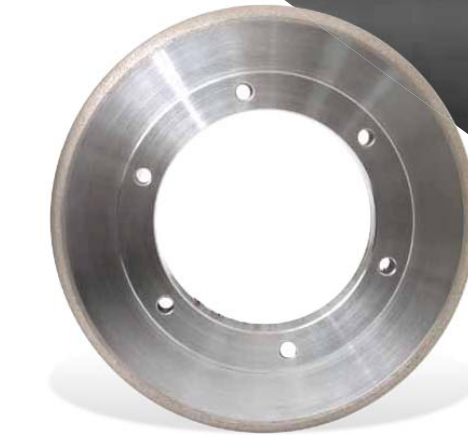
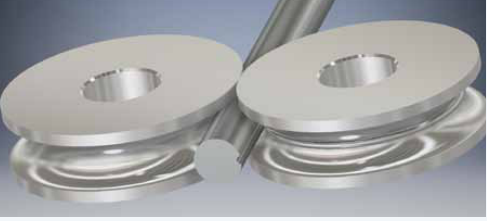
Metal bonds use a metal-powder matrix. Form retention and wear resistance support accurate profile grinding. The carbide-roll example explicitly specifies diamond; its abrasive assignment remains separate despite the CBN chapter heading.
| Parameter | Source value |
|---|---|
| Wheel size | MD-14FF1, 200D-20T-15U-9R-3X-127H |
| Specification | D120L100MA |
| Workpiece | Carbide Roll |
| Material | Tungsten Carbide |
Technical source: Q240, page 4.
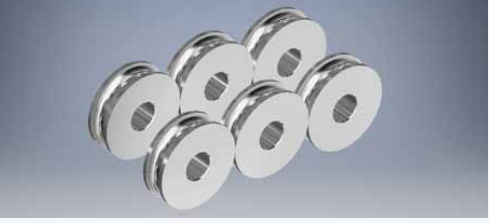
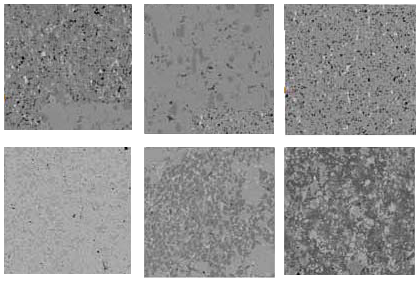
Vitrified bond: documented B170L160VESI comparison
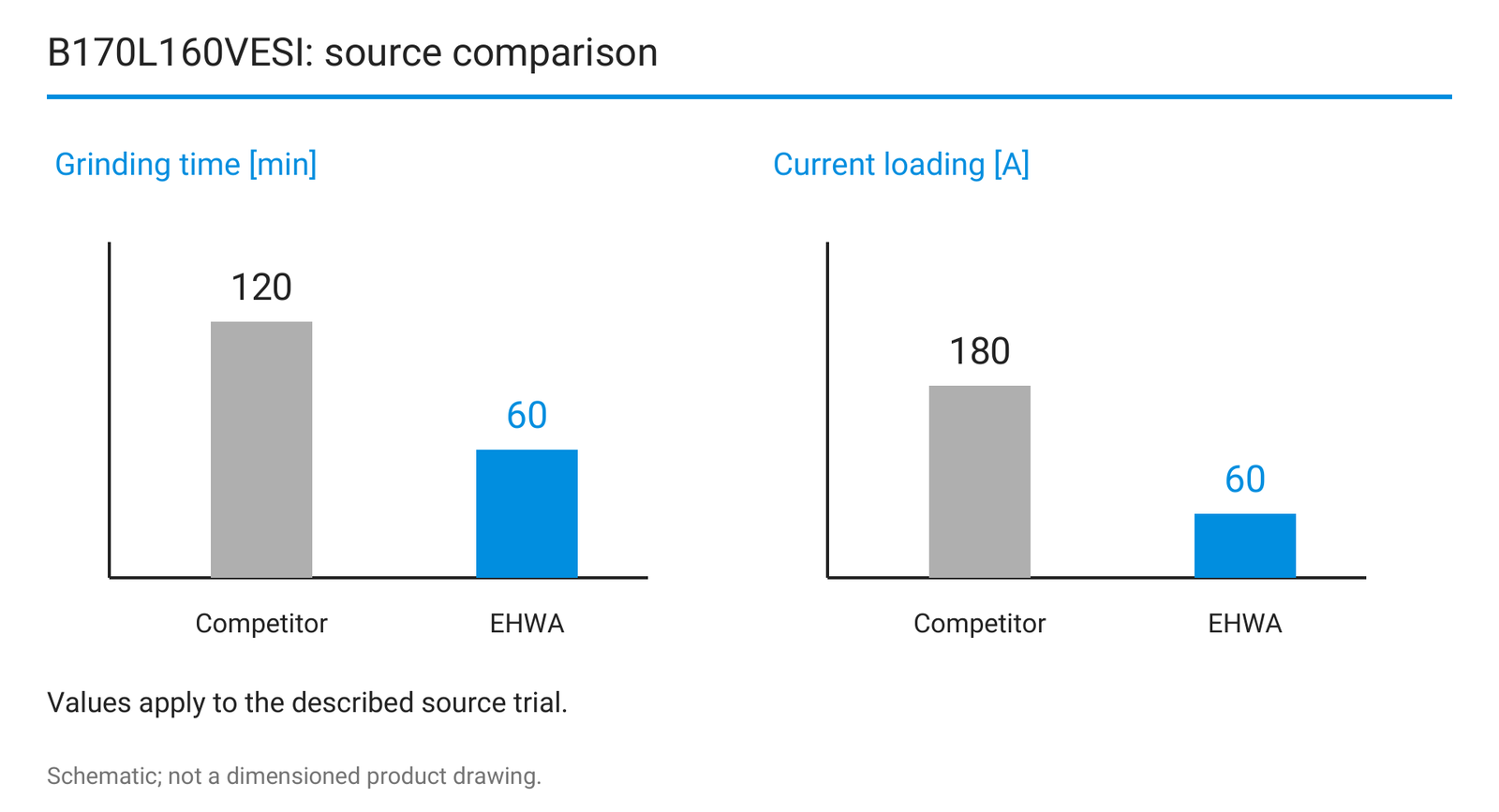
Vitrified bond combines high rigidity with an adjustable pore structure. The documented comparison relates to the roll-grinding setup below. Figures belong to this example.
| Parameter | Value |
|---|---|
| Wheel size | VB-1A1, 910D-100T-5X-304.5H |
| Specification | B170L160VESI |
| Workpiece / material | Finishing Mill / HSS |
| Machine | WALDRICH SIEGEN |
| Stock removal | 0.45-0.60 mm |
| Wheel speed | 30-36 m/s |
| Work speed | 25-30 rpm |
| Table feed | 2300-2800 mm/min |
| Distance infeed | 10-20 (unit not clearly printed) |
| Grinding time: competitor / EHWA | 120 / 60 min |
| Current loading: competitor / EHWA | 180 / 60 A |
Technical source: Q240, page 5.
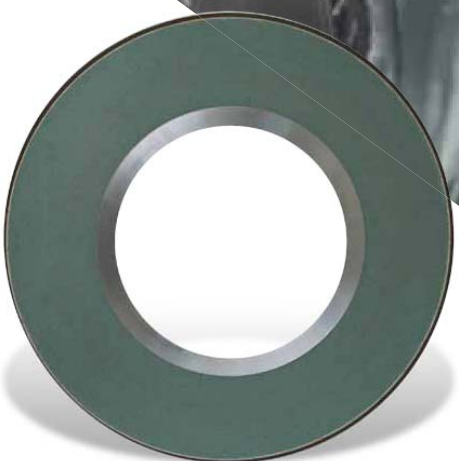
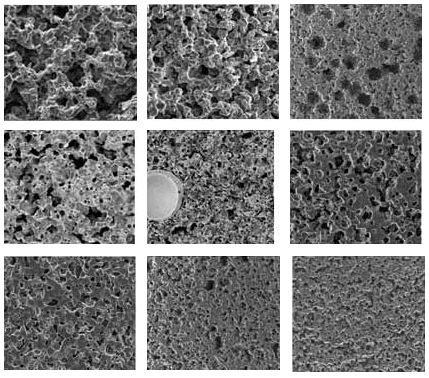
Vitrified bond: three B80P160VESI model variants
This separate roll-grinding example uses B80P160VESI. Sources Q227 and Q246 show different E610 wheel widths: 100T and 50T respectively. These variants are not merged without manufacturer evidence.
| Model | Dimensions | Source |
|---|---|---|
| VB-CBN WHEEL-E910 | VB-1A1, 910D-100T-5X-304.5H | Q227/Q246 p6 |
| VB-CBN WHEEL-E760 | VB-1A1, 760D-100T-10X-304.8H | Q227/Q246 p6 |
| VB-CBN WHEEL-E610 | VB-1A1, 610D-50T-5X-203.2H | Q246 p6 |
| VB-CBN WHEEL-E610 | VB-1A1, 610D-100T-5X-203.2H | Q227 p6 |
Technical source: Q246, page 6.
B80P160VESI: operating conditions and source comparison
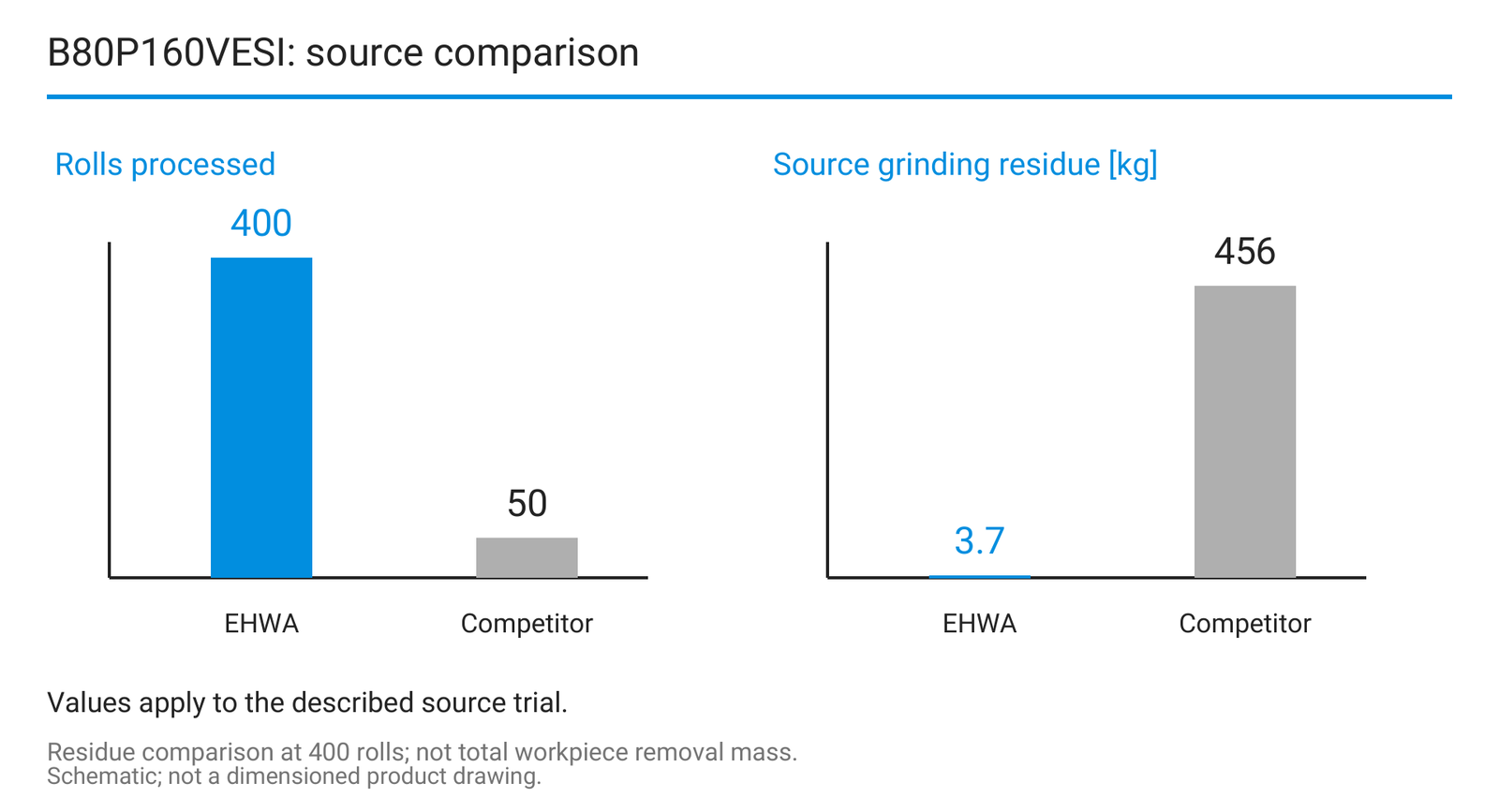
The trial remains separate from the older B170L160VESI comparison. The chart counts 400 processed rolls for EHWA versus 50 for the competitor. A separate comparison states 3.7 versus 456 kg of source-designated grinding residue over 400 processed rolls. This is not interpreted as total removed workpiece mass.
| Parameter | Value |
|---|---|
| Specification | B80P160VESI |
| Workpiece / material | Finishing Mill / HSS |
| Machine | WALDRICH SIEGEN |
| Stock removal | 0.45-0.60 mm |
| Wheel speed | 24-36 m/s |
| Roll speed | 26-38 rpm |
| Table feed | 2300-2800 mm/min |
| Continuous infeed | 1-6 µm |
| Processed rolls: EHWA / competitor | 400 / 50 |
| Grinding residue: EHWA / competitor | 3.7 / 456 kg |
Technical source: Q246, page 6.
EHWA Dressing Tool 100A
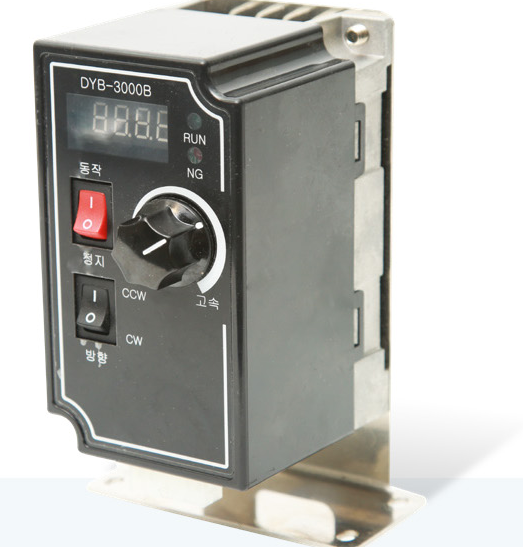
The device supports truing and dressing of vitrified CBN wheels. EHWA describes shorter setup times, stable surface quality and improved wheel utilisation. The device table preserves its printed values; power is stated as 200 W despite the column heading naming kW.
| Device parameter | Source value |
|---|---|
| Input supply | DC 220 V |
| Drive type | Direct Coupler |
| Speed rating | 3000 rpm |
| Dresser wheel diameter maximum | 125D |
| Length | 350L |
| Maximum workpiece size | 910D-100T |
| Power rating | 200 W (BLDC) |
| Model / brand | EHWA Dressing Tool 100A |
| Option | With Controller |
| Application | For Vitrified CBN Wheel |
Technical source: Q246, page 7.
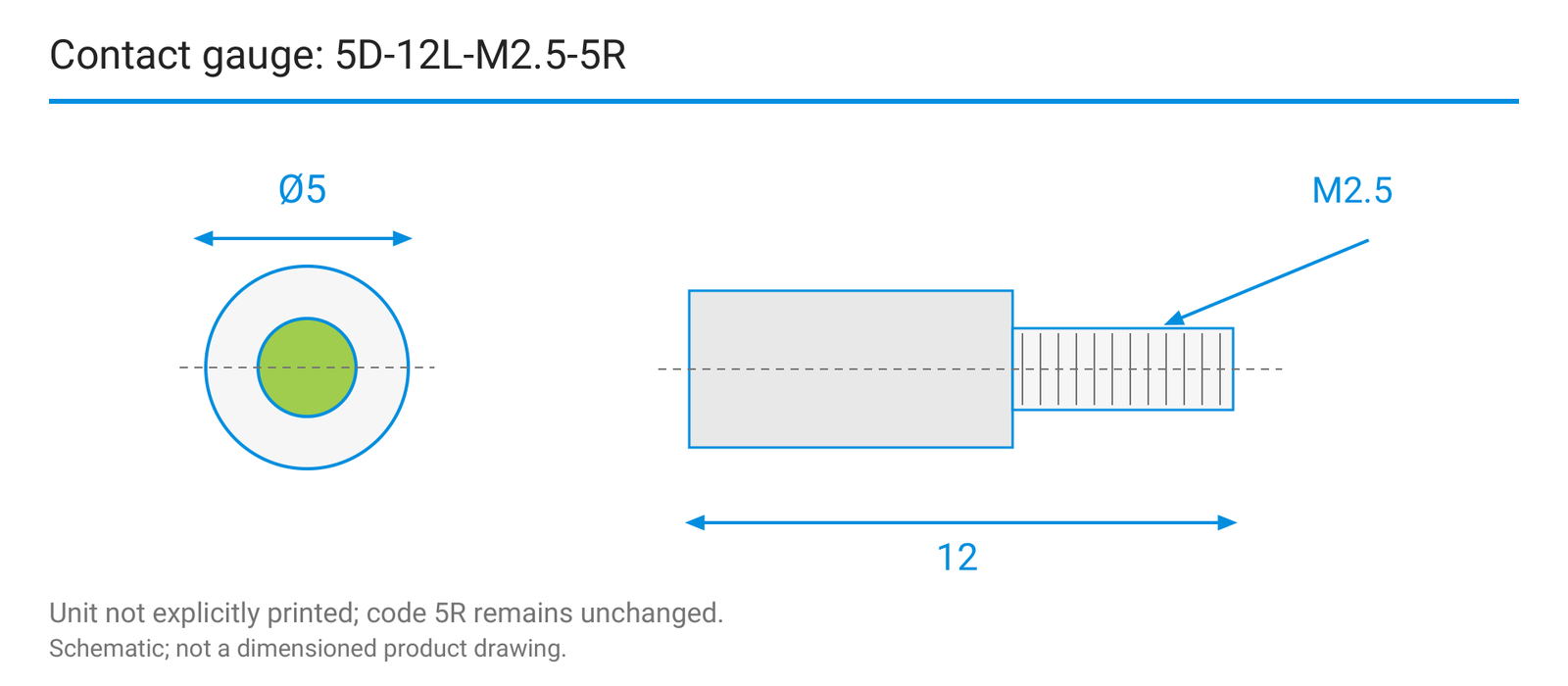
Additional specified contact-gauge design
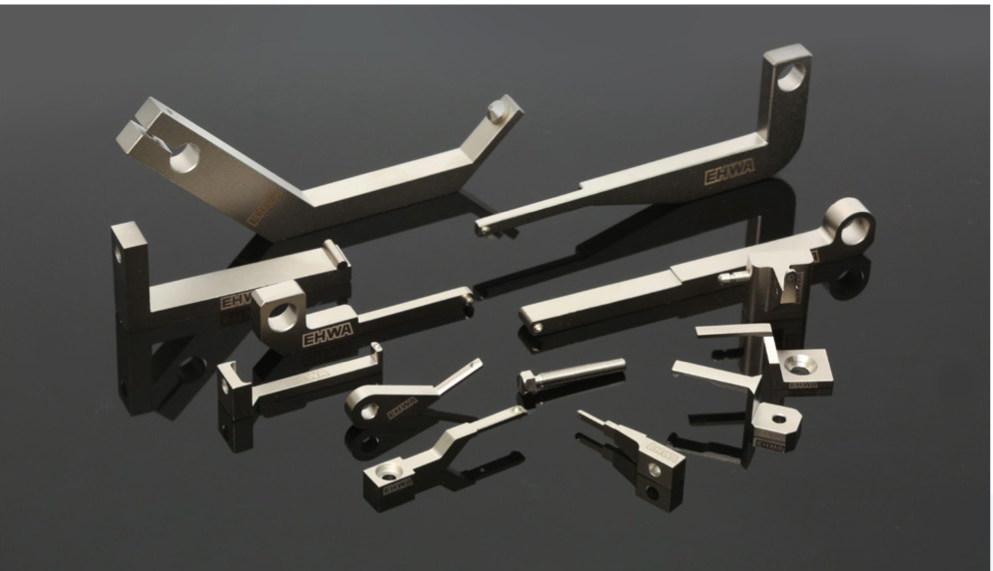
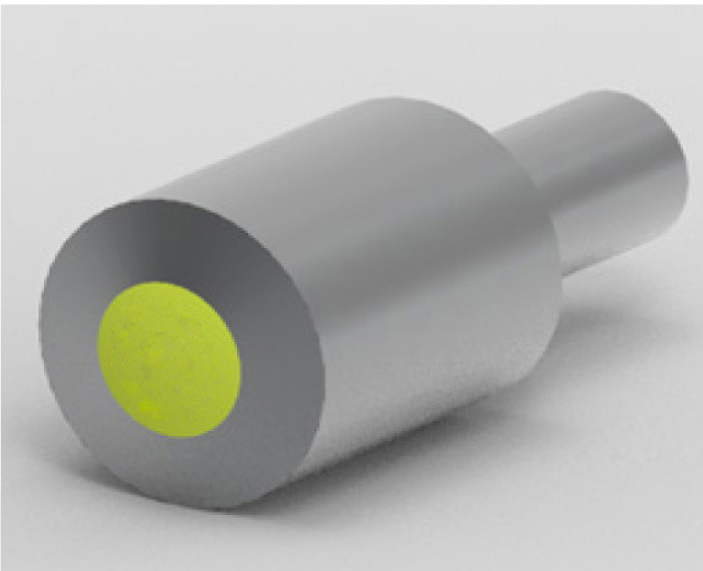
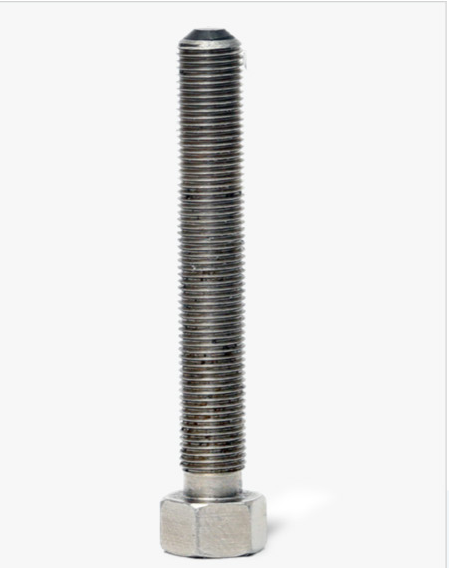
The source shows natural-diamond, PCD and carbide gauge contacts and ruby styli. The three ruby-stylus codes are already present in the full cutting-tool programme. The specific contact geometry 5D-12L-M2.5-5R is an addition.
| Product | Specification | Drawing dimensions |
|---|---|---|
| Diamond Contact Gauge | 5D-12L-M2.5-5R | Ø5; length 12; M2.5; source code 5R |
Technical source: Q246, page 9.
Additional stationary diamond-dresser dimensions
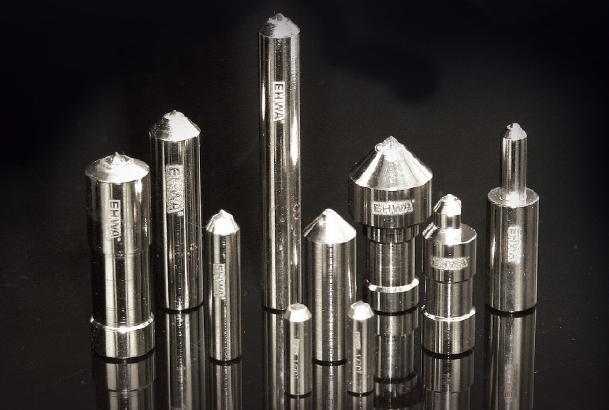
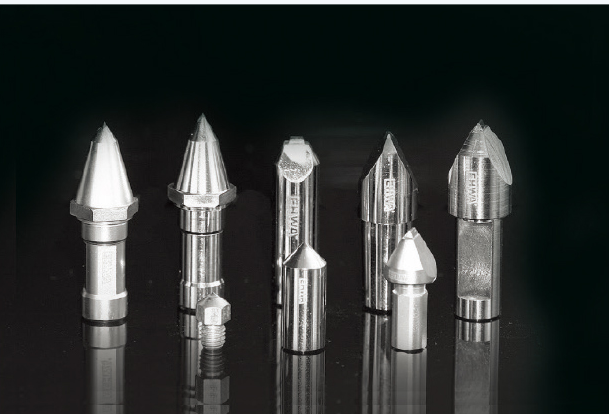
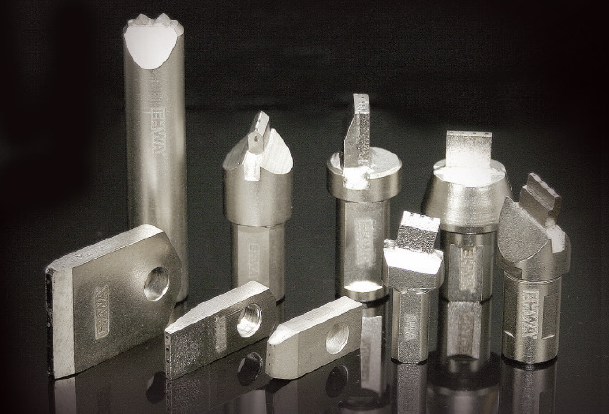
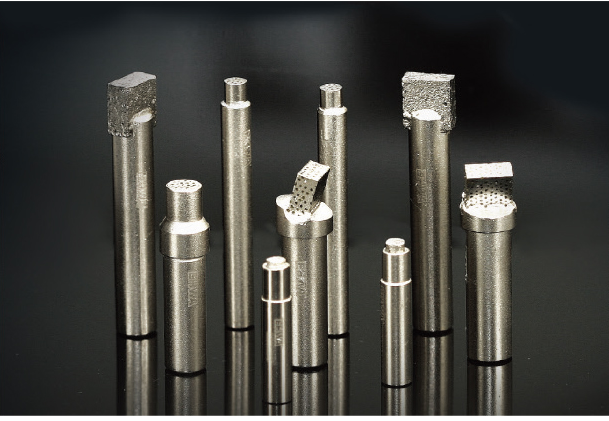
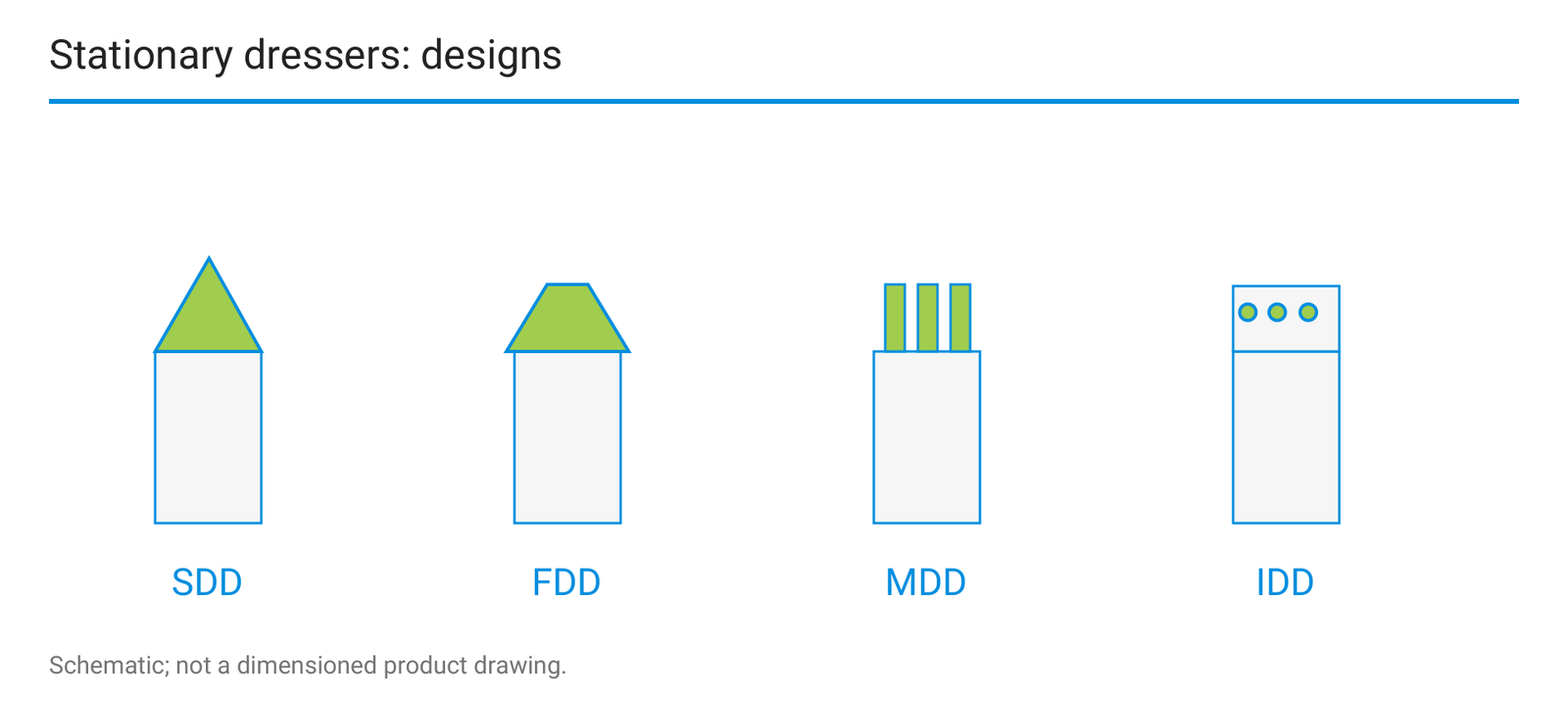
SDD, FDD, MDD and IDD are already explained in the general grinding programme. This source adds specific crystal forms, carat ranges and CVD rod dimensions. Sizes remain assigned to the corresponding dresser design.
| Design | Diamond / form | Size or carat range |
|---|---|---|
| SDD Natural | A Octahedron; B Dodecahedron | 1/30-1 ct |
| SDD Synthetic | F Mono Crystal; G CVD | 0.6 x 0.6 x 3; 0.8 x 0.8 x 3; 1.0 x 1.0 x 3; 1.5 x 1.5 x 3 mm |
| FDD Roof | D Maccle; E Shape; F Mono Crystal; G CVD; H PCD | 1/4-3/4 ct |
| FDD Chisel | D Maccle; E Shape; F Mono Crystal; G CVD | 1/4-3/4 ct |
| FDD Cone | C Elongated; G CVD | 1/4-1/2 ct |
| MDD Blade | CVD | 0.4 x 0.4 x 5; 0.6 x 0.6 x 5; 0.8 x 0.8 x 3; 0.8 x 0.8 x 6; 1.0 x 1.0 x 3 mm |
| MDD Blade | Elongated | 1/80-1/20 ct |
| MDD Natural | A Octahedron; B Dodecahedron | 1/30-1/3 ct |
| IDD | Impregnated; Zenesis Pattern | Mesh #14-#140 |
Technical source: Q246, page 8.
Additional resin-bond E210 models
The newer source lists two additional model variants with B120R100B. The 210D designs and their widths remain separate from the older 212D-84T-24W example.
| Model | Shape / dimensions | Specification |
|---|---|---|
| RB-ORG-E210 | RB-6A2, 210D-37W | B120R100B |
| RB-ORP-E210 | RB-6A2, 210D-25W | B120R100B |
| Further trial detail | Source value |
|---|---|
| Workpiece / material | Finishing mill / HSS |
| Machine | On-Line roll grinder |
| MPM | 1000 |
| Pressure | 45-53 kgf/cm² |
Technical source: Q246, page 4.
Match your application
State roll material, hardness, profile drawing, machine and existing wheel specification. Add stock allowance, speeds, infeed, coolant and the required surface. Device interfaces, supply and gauge drawing dimensions are agreed together.
EHWA Europe: info@ehwadia.de · +49 6173 997780
Editorial date: 14 October 2026.
Questions about tool selection
Which abrasives does EHWA list for HSS and carbide rolls?
The roll-grinding programme shows CBN wheels for HSS rolls and diamond wheels for carbide rolls. Bond, grit, concentration, wheel form and operating parameters are specified with the roll material, machine and surface-finish target.
Are dressing tools and contact gauges included in the roll catalogue?
Yes. The catalogue covers dressing equipment, diamond dressers and contact gauges as well as grinding wheels. The dimensions and source variants remain assigned to the respective tool.