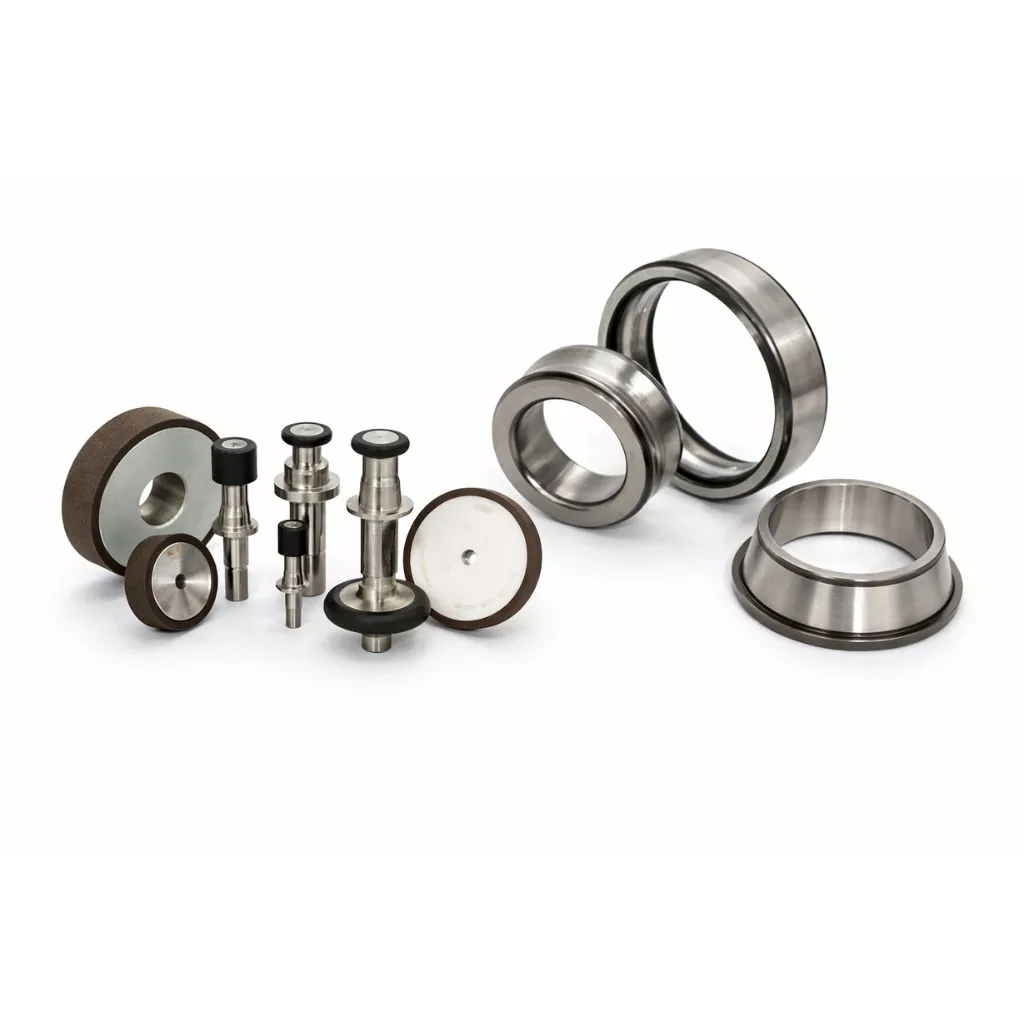
The right tool for your bearing component
Bearing machining depends on the component, the surface to be machined and the manufacturing process. Bearing rings, raceways and rolling elements place different demands on the tool and machine. EHWA offers grinding, honing and dressing tools for the applications described here.
This overview connects the machining surfaces with the appropriate tool families. Application examples from the EHWA catalogue show the roles of grinding wheels, honing stones and dressers. Tool design is adapted to your bearing type, component drawing, machine and machining objectives.
The focus is on surface quality, dimensional and form accuracy, and cost-effective production. An adapted tool design can support longer tool life, fewer tool changes and more consistent machining. When comparing processes, we consider these objectives alongside the quality and number of parts you achieve.
| Component or task | Surface or purpose | Relevant chapter |
|---|---|---|
| Inner ring | Bore or raceway | Bearing ring grinding |
| Outer ring | Raceway, ribs or end faces | Bearing ring grinding |
| Tapered roller bearing inner ring | Raceway superfinishing with a CBN honing stone | Raceway superfinishing |
| Grinding wheel for bearing applications | Generate the grinding profile with a dressing roll | Profile dressing rolls |
| Grinding wheel for internal grinding of bearing rings | Dressing with a cup dresser | Metal-bonded cup dressers |
| Bearing rings, rollers and needles | Face or double-disc grinding of end faces | Face and double-disc grinding |
| Tapered rollers | End-face machining using the horseshoe process | Tapered roller end-face grinding |
Bearing ring grinding
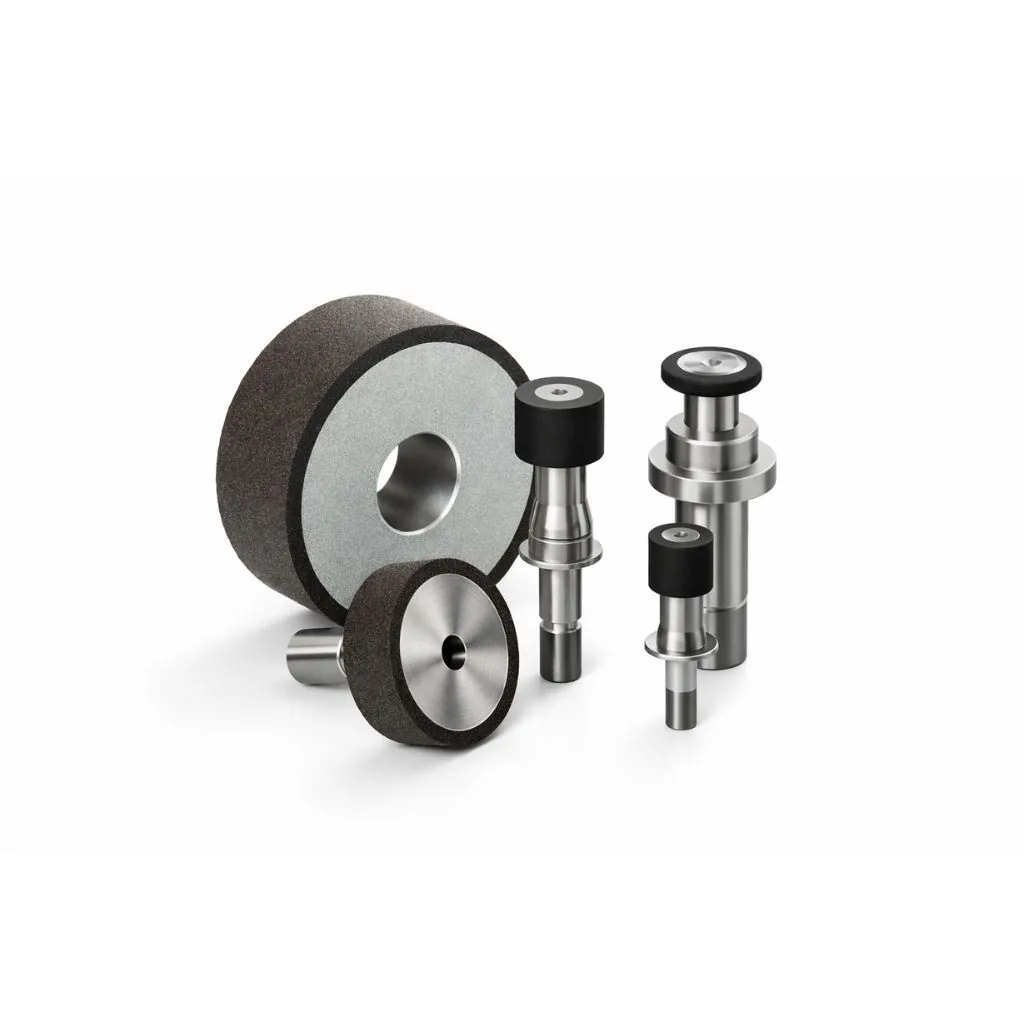
Vitrified-bond CBN grinding wheels are used for bearing ring machining. The EHWA catalogue shows applications for the inner ring bore and raceway, and the outer ring raceway, ribs and end faces.
The requirements of each surface determine tool design. Identify the surface to be machined in your enquiry and state the required dimensions, form tolerances and surface parameters.
The tool designs shown include ceramic bodies and bodies made of steel or aluminium. Further designs incorporate a spindle or threaded spindle. The design suited to your application depends, among other things, on the machine, tool mounting and component geometry.
Process features and benefits
The combination of CBN abrasive, vitrified bond and suitable body design can be adapted to the required stock removal and surface finish. The EHWA catalogue describes high stock removal rates, lower grinding forces and reduced mechanical and thermal loading of the workpiece. A suitable design can therefore support short machining times and lower loading of the workpiece and spindle. Surface finish, cylindricity and dimensional accuracy are central considerations.
A coordinated dressing process maintains the required grinding profile and the working surface of the wheel. Grinding and dressing are therefore considered as an integrated process.
Catalogue example: bore grinding
| Feature | Value in the German catalogue source |
|---|---|
| Wheel peripheral speed | 30-80 m/s |
| Workpiece stock allowance | Ø 0.1-1.0 mm, diametrical |
| Dressing stock removal | 3-30 µm total |
| Dressing tool | Rotary dressing tool |
| Grinding fluid | Oil or emulsion |
Source: German EHWA grinding catalogue, page 28. These values describe the application example shown there. The original English bearing catalogue gives partly different stock allowance and dressing values. For your process, the source, tool and machine are considered together; the permissible speed is determined by the marking on the specific grinding wheel.
For process assessment, we need the material and hardness, grinding allowance, grinding fluid, and existing grinding and dressing tools. Available process data helps assess your starting point.
Request a tool design for your bearing ring grinding process: Technical advice.
Raceway superfinishing
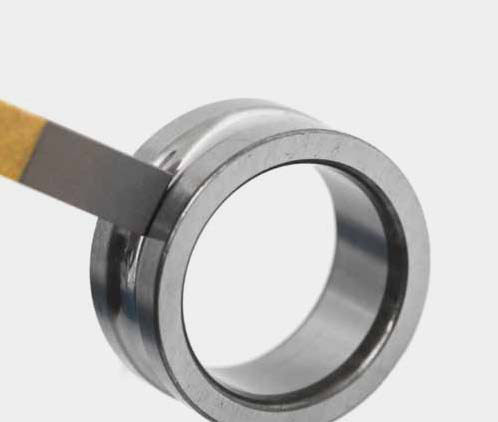
EHWA supplies CBN honing stones for raceway superfinishing. In this process, also known as short-stroke honing, a short oscillating tool movement is superimposed on the rotation of the workpiece. The catalogue example shows the raceway of a tapered roller bearing inner ring. The component and bearing type are essential to tool selection.
Finer surfaces and long tool life
EHWA describes high surface quality, consistent machining performance and longer tool life than conventional honing stones. This can reduce tool changes and improve productivity. In the actual process, surface quality, machining time and the number of parts machined are assessed together.
Catalogue example: tapered roller bearing inner ring
| Feature | EHWA catalogue value |
|---|---|
| Honing stone specification | B2400 K120 VHWPN |
| Workpiece speed | 100-200 rpm |
| Stock allowance | 5 µm |
| Reported result | Ra 0.06 µm or lower |
The German catalogue also gives a tool-life comparison of 1,500 parts for a conventional honing stone and 15,000 parts for the EHWA CBN honing stone. The figures illustrate the comparison shown; its conditions are not fully stated. They do not imply ten times the tool life in other applications.
Source: German EHWA grinding catalogue, page 29. The specification, speed, allowance and roughness value belong to this example and are individually assessed for other components.
If you want to superfinish a raceway with honing stones, state the process and machine you use. A component drawing and information on the existing surface help describe the task. Add the required surface finish, machining allowance and current stone specification.
For a process comparison, specify the result you wish to improve, such as surface quality, tool life or machining time. This makes it possible to adapt the design to a concrete task.
Enquire about CBN honing stones for your process: Technical advice.
Profile dressing rolls for bearing applications
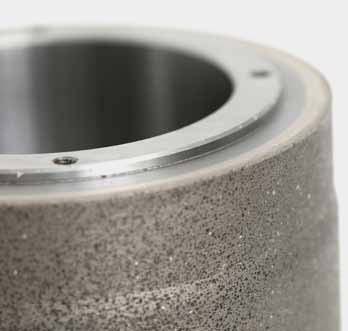
Profile dressing rolls generate the required contour in the grinding wheel. EHWA describes dressing rolls for ball, roller, hub and water pump bearings. Profiles are manufactured to customer requirements; the catalogue illustrations include examples for water pump bearings, ball bearings and tapered roller bearings.
The dressing roll machines the grinding wheel. The bearing component then receives its contour during grinding. Tool design therefore requires both the intended component contour and information on the grinding wheel and dressing unit.
Profile design based on the drawing supports repeatable contour transfer. It connects the required bearing geometry with the dressing process and is an essential element of the subsequent form grinding operation. Profile, diamond arrangement and mounting are considered together as tool features.
The catalogue lists durable dressing diamonds, free-cutting dressing with low spindle loading, and long service life as benefits. The customer-specific manufacturing process enables tight profile tolerances. In the process, this can support precise contour transfer and reduced non-cutting time.
Where possible, provide a profile drawing with tolerances, mounting details and data on the current dressing process. If you wish to replace an existing dressing roll, add its drawing or designation and explain the reason for the change.
Request a profile dressing roll based on your drawing: Technical advice.
Metal-bonded cup dressers
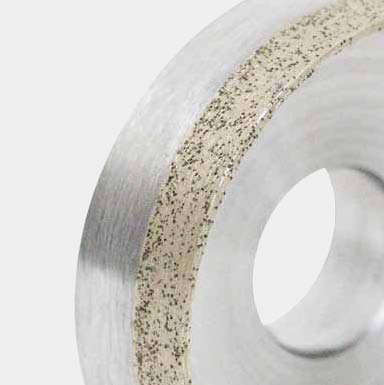
Metal-bonded cup dressers are used to dress grinding wheels for internal grinding of bearing rings. The EHWA catalogue shows this application with vitrified-bond CBN grinding wheels and different body designs.
The diamond layer design forms part of the tool specification. The catalogue considers the width of the diamond layer in relation to dressing results. Specific dimensions and process data are coordinated for your grinding wheel and dressing unit.
EHWA describes long service life and precise dressing as benefits of this tool form. A suitable diamond layer can support a free-cutting grinding wheel surface and longer intervals between dressing operations.
Catalogue service-life figure: 20,000-30,000 dressing operations, depending on grinding wheel size. This range describes an application example, not a general tool-life commitment; the actual process variables and tool dimensions are also considered during design.
For your enquiry, provide the grinding wheel specification and dimensions, tool mounting and dressing unit design. Also describe the result you want to achieve during dressing and subsequent grinding.
Enquire about a cup dresser for your internal grinding process: Technical advice.
Face and double-disc grinding
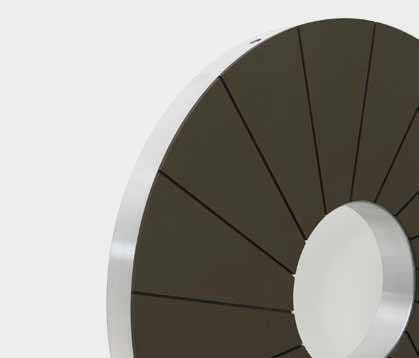
EHWA manufactures grinding wheels for face and double-disc grinding of bearing components. The applications described include inner and outer rings, and rolling elements from roller and needle bearings. The catalogue describes vertical and horizontal machining.
The process concerns end faces and their dimensional, form and surface requirements. Double-disc grinding includes the two opposing sides in the machining operation. Tool geometry, workpiece guidance and feed are coordinated for the manufacturing task. This supports repeatable series machining of the bearing component concerned.
The development objectives described in the EHWA catalogue are shorter cycle times, longer tool life and improved surfaces. For your production, these objectives are assessed using cycle time, achieved quality and the number of parts machined per tool.
Identify the component and end faces in your enquiry. State whether you machine bearing rings, rollers or needles and whether the process is face or double-disc grinding. The component drawing, existing wheel design and machine configuration form the basis for tool assessment.
Add the allowance, required component dimensions and relevant form and surface tolerances. Workpiece guidance, feed and previous machining results are also useful when assessing an existing process.
Enquire about grinding tools for your bearing components: Technical advice.
Tapered roller end-face grinding
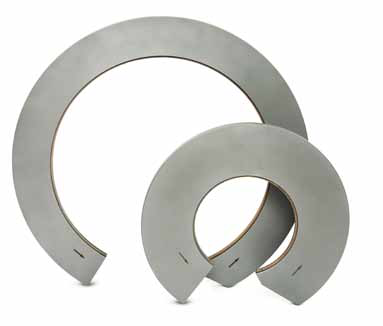
For tapered roller end-face machining, the EHWA catalogue describes grinding tools for the horseshoe process. This application concerns the tapered rollers of a tapered roller bearing and their end faces.
The tool is adapted to the end-face geometry and workpiece guidance in the process. Dimensional accuracy, form and surface quality are assessed together because the required end face results from the interaction of tool and machine. This adds a dedicated tool solution for tapered rollers to the catalogue's ring and raceway machining applications.
EHWA describes long tool life, high potential stock removal and high-quality surfaces. These properties can reduce tool purchasing and setup requirements. The balance between machining performance, achieved surface finish and tool life in the actual process is decisive.
For a technical enquiry, provide a tapered roller drawing specifying end-face geometry and required tolerances. Also state the machine, existing tool design, material and machining allowance.
If you want to optimise the process, describe the objective and starting point. Information on surface quality, number of parts machined and tool changes makes comparison easier.
Enquire about a tool for your tapered roller end-face machining: Technical advice.
Your technical enquiry
Describe your application using the component drawing and existing process where possible. The following information helps discuss the task in detail:
| Area | Useful information |
|---|---|
| Component and surface | Bearing type, component designation, surface to be machined, drawing and dimensions |
| Material | Material designation, hardness and heat treatment condition |
| Machine | Manufacturer, machine model, process and tool mounting |
| Starting point | Allowance, existing surface, current tool and process data |
| Grinding and dressing tools | Specification, dimensions, mounting and dressing unit, where relevant to the process |
| Grinding fluid | Type and designation of the fluid used |
| Machining objective | Required dimensions, form tolerances and surface parameters; intended process improvement |
You do not need every detail at the outset. State the process and information already available. Open points can be clarified during the technical discussion.
Your contact: Fatih Genc · Technical Sales
- Email: genc@ehwadia.de
- Telephone: +49 (0) 6173 - 99 77 821
- Submit a technical enquiry
Please mention "Bearing machining" and the relevant chapter in your enquiry, for example "Bearing ring grinding" or "Tapered roller end-face grinding". This helps connect the advice directly to the information you have read.