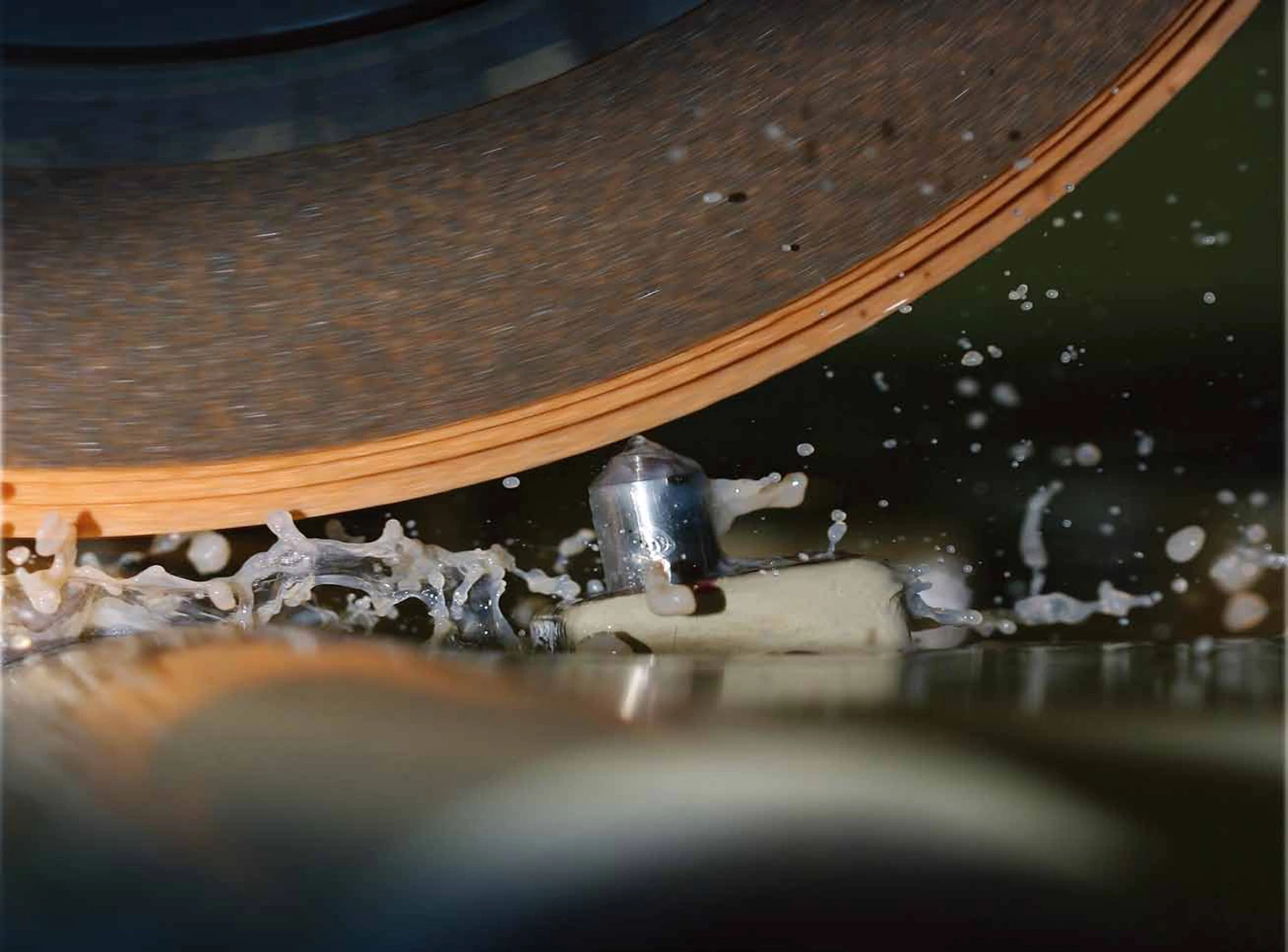
Grinding wheel contour and working surface
A diamond dresser generates or maintains the required grinding wheel shape and working surface. EHWA distinguishes several stationary dresser types. Selection depends on wheel shape, dressing task, machine mounting and intended grinding result.
The dresser is a separate tool within the grinding process. Its diamond design and contact geometry are considered with the grinding wheel. Suitable selection can support repeatable profiles, an appropriate wheel surface and more consistent machining.
Tool types and construction
| Catalogue code | Dresser type | Construction described |
|---|---|---|
| SDD | Single-point diamond dresser | Selected diamond crystal in a metal matrix and steel shank |
| FDD | Forming diamond dresser | Diamond shaped to the required form |
| MDD | Multi-point diamond dresser | Two or more diamonds in a metal matrix |
| IDD | Impregnated diamond dresser | Diamond particles sintered with a metal matrix |
| PCD | PCD dresser | Brazed polycrystalline diamond |
Separate diamond material and dresser form
The catalogue compares natural diamond, single-crystal diamond, CVD diamond and PCD. These names describe the diamond material; SDD, FDD, MDD and IDD describe the tool construction. A code alone therefore does not define the complete dresser.
Shank, mounting, diamond position, contact surface and required contour are important for tool design. When replacing a tool, a drawing of the current dresser and the grinding wheel specification help establish whether to retain the existing shape or change it for a specific purpose.
Selection connects profile accuracy and tool life with the dressing sequence. A service-life claim must be tied to the wheel and process; material properties alone do not replace that relationship.
Catalogue example: grinding wheel shape
PDF page 5 of the dresser catalogue shows a selection matrix. For straight or tapered wheels it names SDD, MDD and IDD; for concave, angled and multi-angled forms it names FDD and MDD. For convex forms the source names SDD, FDD and MDD.
This assignment provides guidance based on the wheel shapes shown. Actual selection also considers wheel specification, required contour, dressing equipment and tool mounting. The examples help identify a concrete enquiry and discuss suitable alternatives.
Your technical enquiry
Send a drawing, material designation, machine and mounting details, and the intended result. For existing processes, the current tool specification, machining data and a description of the wear pattern help. Mention the topic and relevant catalogue page. We discuss the tool design and next steps with you.
EHWA Europe GmbH
Sources and complete catalogues
- Diamond Dressers - tool types and shape selection, PDF page 2, 5; HQ source.
- Diamond Dressers - supplementary catalogue version, PDF page 2, 5; HQ source.
- Diamond Dressers - comparison version, PDF page 2; HQ source.
This thematic overview is a compact introduction to these applications. The linked original catalogues contain further designs, tables and technical information.